How does an air source heat pump work?
An air source heat pump takes heat from the air outside your home and moves it into your heating and hot water. A fan draws outside air across a coil filled with refrigerant, which absorbs heat even when the air feels cold. A compressor then raises the temperature of that refrigerant, and a heat exchanger passes the heat into the water that runs through your radiators and your hot water cylinder. Because it moves heat rather than burning fuel to make it, a heat pump typically delivers 2.5 to 4 units of heat for every unit of electricity it uses, according to the Energy Saving Trust.
Key facts
- An air source heat pump moves heat from outside air into your home using a refrigerant, a compressor and a heat exchanger.
- The Energy Saving Trust gives a typical efficiency of 2.5 to 4 units of heat per unit of electricity (checked 10 November 2026).
- It works best at lower water temperatures, so insulation and correctly sized radiators matter.
- Most homes with an air-to-water heat pump need a hot water cylinder.
- In England, most heat pumps on houses are permitted development, within limits on size, noise and position.
- In England and Wales, the Boiler Upgrade Scheme takes £7,500 off an air source heat pump that replaces fossil fuel heating.
How does a heat pump get heat out of cold air?
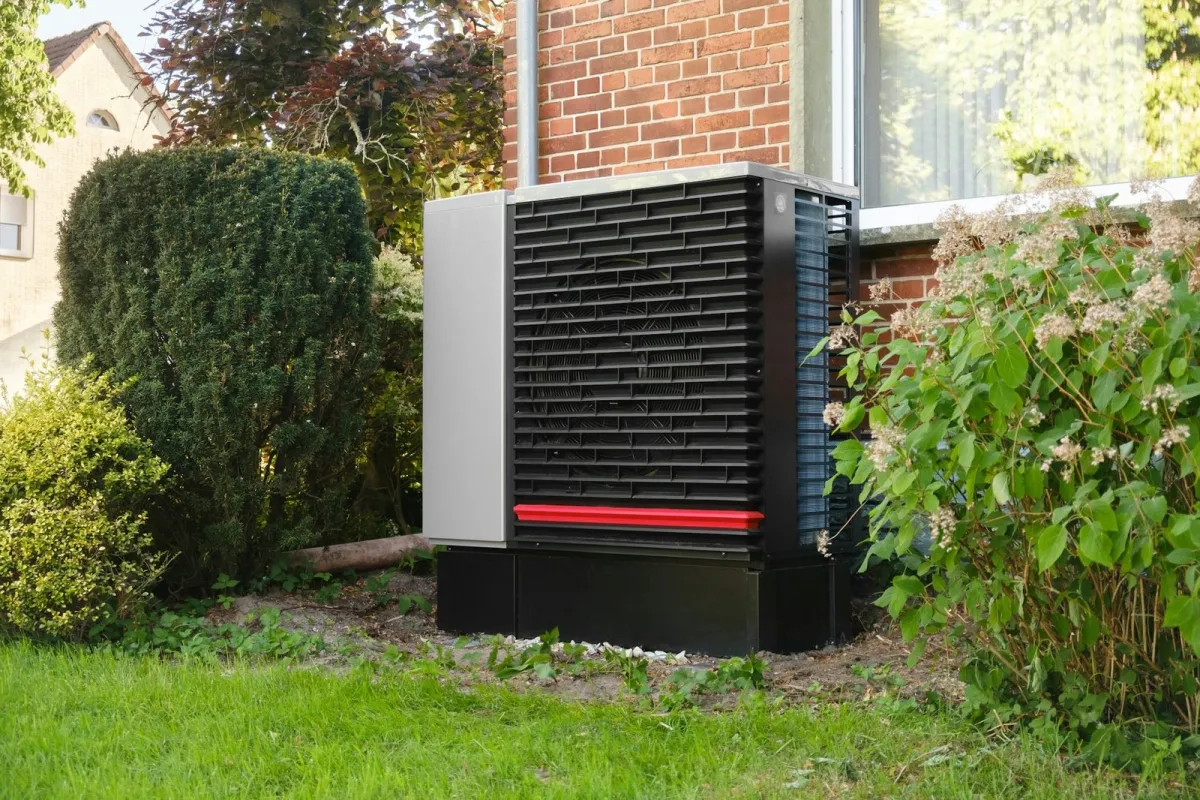
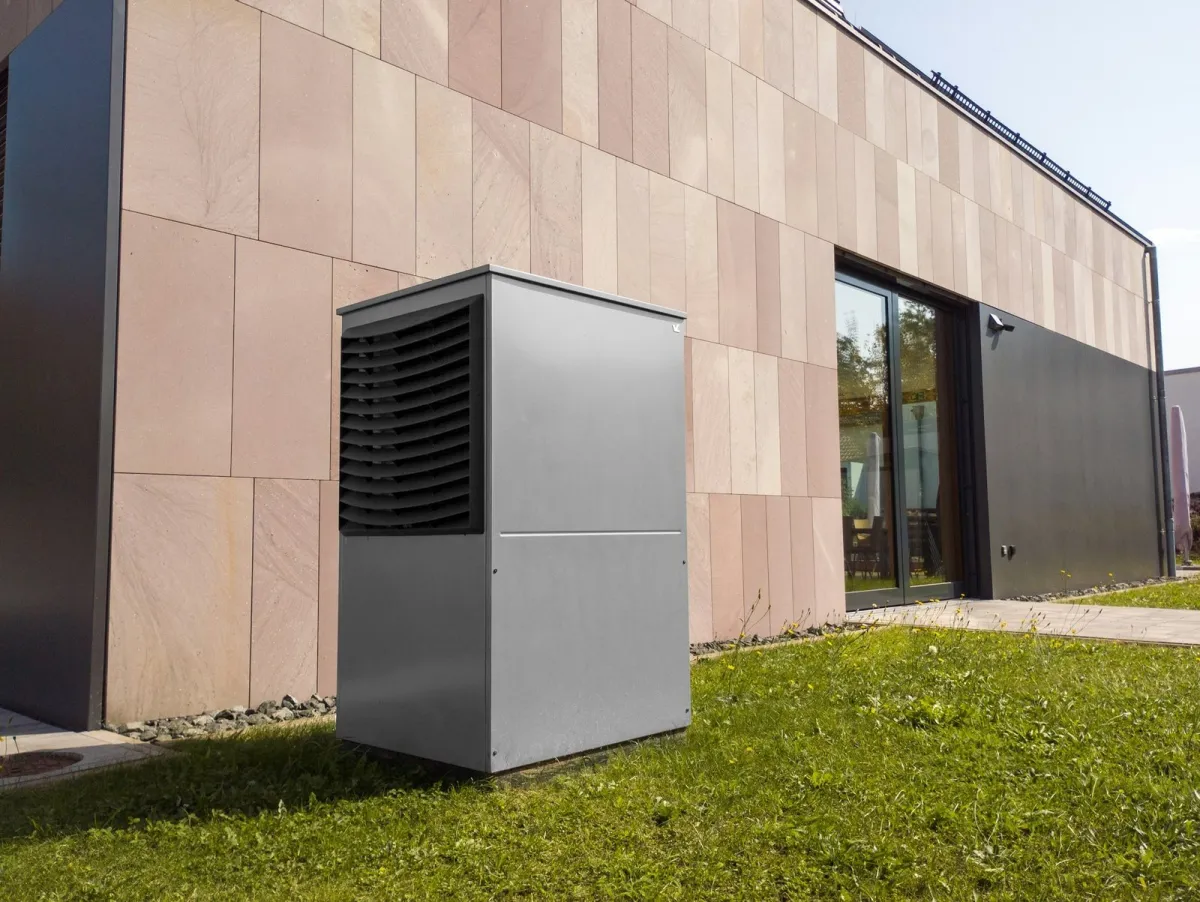
Even on a cold winter day the outside air contains heat. The refrigerant inside a heat pump boils at a very low temperature, so when outside air passes over the coil in the outdoor unit, the refrigerant absorbs that heat and turns into a gas. The cycle then runs in four steps:
- Evaporate. The refrigerant absorbs heat from the outside air and evaporates.
- Compress. An electric compressor squeezes the gas, which raises its temperature.
- Condense. The hot gas passes through a heat exchanger and gives its heat to the water in your heating system, turning back into a liquid.
- Expand. An expansion valve lowers the pressure and temperature of the liquid, and the cycle starts again.
It is the same principle as a fridge, run the other way: a fridge moves heat out of the food compartment, a heat pump moves heat into your home.
How efficient is an air source heat pump?
Efficiency is described by the coefficient of performance (COP): the heat delivered divided by the electricity used. A COP of 3 means three units of heat for each unit of electricity. The Energy Saving Trust gives a typical range of 2.5 to 4. Because performance changes with the weather, the more useful figure is the seasonal one (SCOP), averaged over a year.
Two things have the biggest effect on real-world efficiency. The first is the temperature outside: the colder the air, the harder the heat pump works. The second is the temperature of the water it has to produce: the lower the flow temperature, the more efficient it is. That is why heat pumps are designed to run steadily for long periods at lower water temperatures, rather than in short, hot bursts like many gas boilers.
Air-to-water or air-to-air?
Most heat pumps in UK homes are air-to-water: they heat water for radiators or underfloor heating and for a hot water cylinder, replacing a boiler. Air-to-air heat pumps blow warm air into rooms through indoor units. They can also cool, but they do not heat hot water, so a home with one needs a separate way of heating water. Under the Boiler Upgrade Scheme, air-to-water heat pumps can get a £7,500 grant and air-to-air heat pumps £2,500 (GOV.UK, checked 10 November 2026).
Is my home suitable for a heat pump?
Most homes can use a heat pump, but some need more preparation than others. Things to check:
- Heat loss. A design should start with a room-by-room heat loss calculation. Draught-proofing and insulation reduce the heat loss, so a smaller heat pump will do.
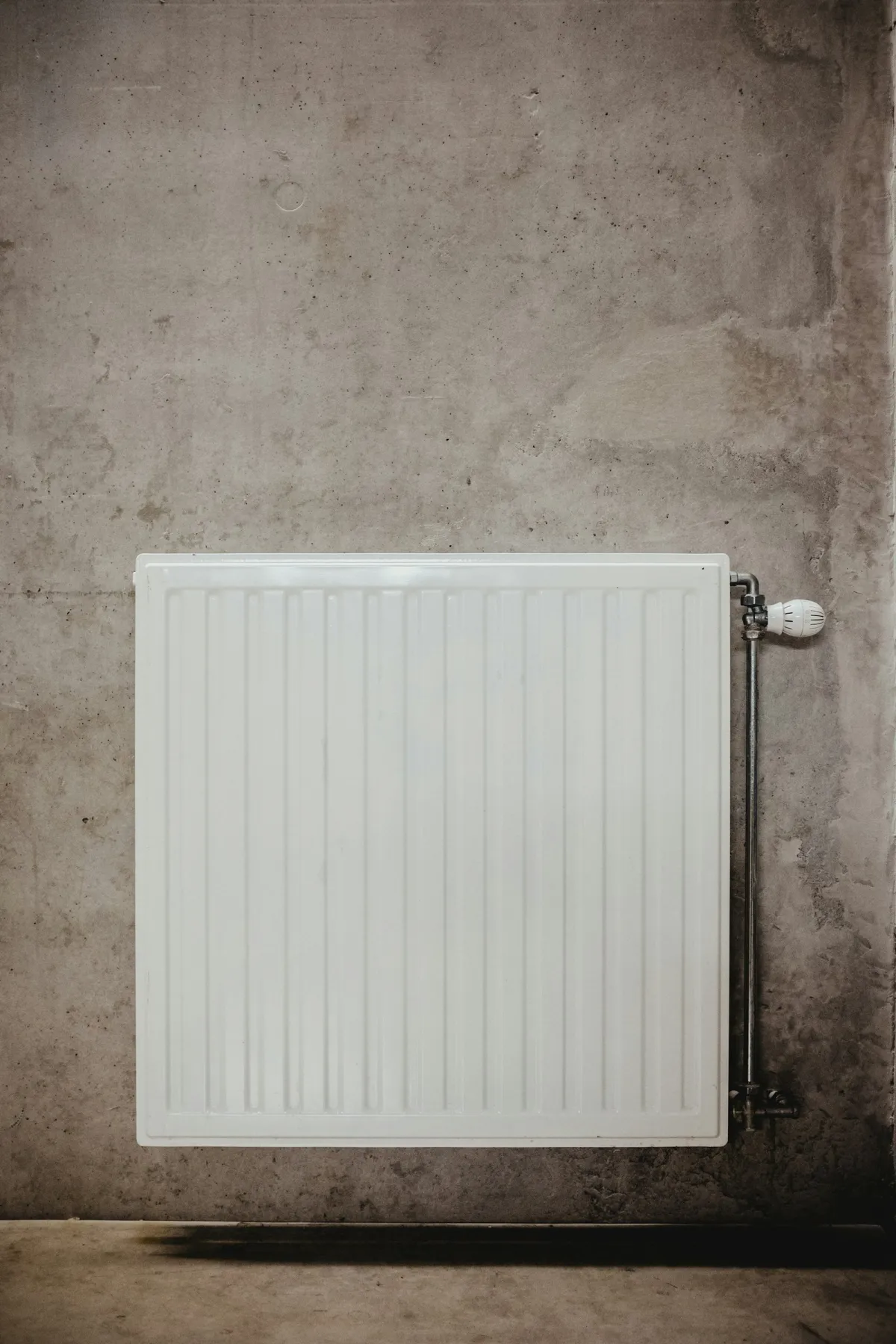
- Radiators. At lower water temperatures a radiator gives out less heat, so some rooms may need a larger radiator.
- Hot water. An air-to-water heat pump usually heats a hot water cylinder, so you need a place for one. Homes with a combi boiler often have no cylinder today.
- Outdoor space. The outdoor unit needs a spot with free air flow, within the planning and noise rules.
- Electrics. The electrical supply and the consumer unit must be able to take the new load.
The government's online tool, Check if a heat pump could be suitable for you, gives a first answer based on your home and current heating.
Does an air source heat pump work in winter?
Yes. A heat pump works harder and less efficiently in very cold weather, but it is designed to keep heating the home. In cold, damp weather the outdoor unit also defrosts its coil from time to time, which is normal. A correctly sized system, designed for the coldest days in your area, keeps the house warm all winter.
Is an air source heat pump noisy?
The outdoor unit has a fan and a compressor, so it makes some sound, similar in character to an air conditioning unit. To be permitted development in England, an installation must meet the noise standard set in the permitted development rules, which checks the sound level at the nearest neighbouring window. Siting the unit away from bedrooms and hard reflecting corners helps.
Do I need planning permission?
Often not. Since 29 May 2025, a house in England can have one air source heat pump as permitted development, or two on a detached house, with an outdoor unit of up to 1.5 cubic metres, as long as it meets the noise standard in the rules and is not on a pitched roof. Listed buildings, conservation areas and flats have tighter rules. Our guide Do you need planning permission for a heat pump in London? explains them.
Frequently asked questions
Can a heat pump heat my hot water?
Yes, an air-to-water heat pump heats a hot water cylinder as well as your radiators. An air-to-air heat pump does not heat water.
Can I keep my gas boiler as a backup?
You can, but a hybrid system with a gas boiler cannot get a Boiler Upgrade Scheme grant. See The Boiler Upgrade Scheme explained.
Is a heat pump a good idea in an extension or loft conversion?
Building work is a good moment to plan one, because it opens up space for pipes and a cylinder. See MVHR and heat pumps in extensions and loft conversions.
How can GONT LTD help?
GONT LTD is a London building company that builds house extensions and loft conversions and installs MVHR heat recovery ventilation. Our team holds F-Gas and NICEIC certifications, and we manage the whole process, from planning permission to building control sign-off. If you are weighing up a heat pump alongside building work, the consultation is free: call +44 7783 930505 (Monday to Friday, 9am to 5pm), email info@gont.co.uk, visit our showroom at 9 Royal Parade, Dawes Road, Fulham, or tell us about your project on our contact page. Our heat pump guide sums up the rules.
Sources
- Energy Saving Trust: Heat pumps, how they work, costs and savings
- Energy Saving Trust: Air source heat pumps
- GOV.UK: Check if a heat pump could be suitable for you
- GOV.UK: Boiler Upgrade Scheme, what you can get
- Planning Portal: Air source heat pump, planning permission
General guidance for homes in England, checked against the sources above on 10 November 2026. Figures and grant values can change, so check the sources before you decide.