Do you need to replace your fuse box? Consumer unit replacement explained
You do not have to replace a consumer unit just because it is old or made of plastic, but an old fuse box with rewireable fuses, no RCD protection, frequent tripping or signs of overheating are all reasons to have it checked and usually replaced. Since January 2016, new and replacement consumer units in homes have had to be non-combustible, in practice usually steel. Replacing one is notifiable under Part P, and the cost depends mainly on the size and type of the new unit and on the state of the existing wiring and earthing.
Key facts
- A fuse box uses fuses that have to be replaced when they blow; a consumer unit uses circuit breakers that trip and can be reset.
- Since January 2016, BS 7671 requires new and replacement consumer units in homes to have a non-combustible enclosure.
- Existing plastic consumer units do not have to be replaced just because they are plastic.
- Installing a new or replacement consumer unit is notifiable work under Part P in England.
- The cost depends on the number of circuits, the type of protection and any remedial work the old installation needs.
What is the difference between a fuse box and a consumer unit?
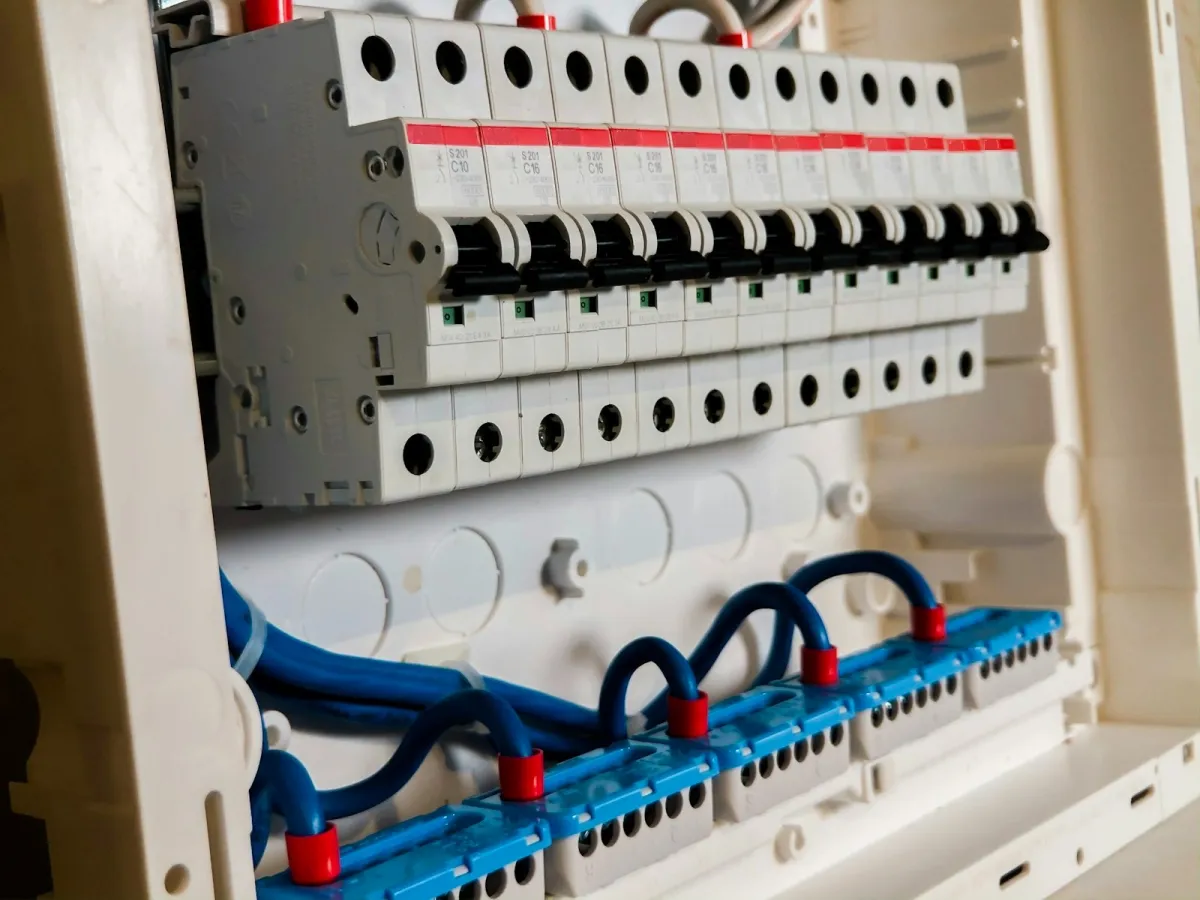
Both are the box where the electricity supply is split into circuits for lighting, sockets and appliances. An old fuse box protects each circuit with a fuse, which has to be replaced or rewired when it blows. A modern consumer unit uses miniature circuit breakers (MCBs), which trip automatically and can be switched back on.
Modern units also add protection that many old fuse boxes do not have:
- RCD (residual current device): cuts the power quickly if current leaks to earth, to reduce the risk of electric shock and electrical fires. One RCD can protect a group of circuits.
- RCBO: combines an RCD and an MCB in one device, so each circuit has its own protection and one fault does not switch off the others.
- SPD (surge protection device): protects the installation and appliances from voltage surges; ask whether one is included.
Do you need to replace your fuse box?
Not automatically. A consumer unit has no fixed lifespan, and the condition of the installation matters more than its age. Common reasons to replace one are:
- an old-style fuse box with rewireable fuses instead of circuit breakers;
- frequent tripping that cannot be traced to a faulty appliance;
- no RCD protection;
- burning smells, buzzing or visible damage around the unit;
- an Electrical Installation Condition Report (EICR) that recommends it;
- new circuits needed for a kitchen, bathroom, extension or EV charger.
If the unit is damaged, overheating or has exposed live parts, it needs attention straight away, so call an electrician. Otherwise, an inspection will tell you whether the unit can stay or should be replaced.
Does a plastic consumer unit have to be replaced?
No, not just because it is plastic. Amendment 3 to BS 7671, the wiring regulations, introduced regulation 421.1.201, which applies from January 2016. It requires consumer units in homes, in new installations or when a unit is replaced, to have an enclosure made of non-combustible material, or to sit inside a non-combustible cabinet. The IET explains that steel is in practice the material used.
The IET also says it is not a requirement to replace every existing combustible consumer unit. Instead, a competent person should inspect the installation and decide, taking into account its age, condition and location. A unit under a wooden staircase or boxed into a cupboard may be seen as a higher fire risk. Adding a new circuit to an existing plastic unit does not force an upgrade, as long as there is a spare way or an existing way is reused.
What rules apply to replacing a consumer unit?
In England, installing a new or replacement consumer unit is notifiable work under Part P of the Building Regulations. The Planning Portal explains that an electrician registered with a competent person scheme can self-certify the work; otherwise building control must be notified before work starts and will inspect it.
When the job is finished, you should receive an Electrical Installation Certificate showing the work has been tested and, if a registered electrician did the work, a Building Regulations compliance certificate within 30 days. All work should follow BS 7671.
Private landlords in England must have the electrical installation in their rented properties checked at least every 5 years by a qualified person, and give tenants proof of the inspection.
What affects the cost of a consumer unit replacement?
- The size of the unit. A larger home with more circuits needs a unit with more ways.
- The type of protection. A unit with RCBOs on each circuit, or with surge protection, costs more than a simpler split-load unit with shared RCDs.
- The state of the existing installation. Testing can show faults on circuits, missing earthing or earth bonding to gas and water pipes, or meter tails that need replacing, and these have to be put right.
- The position. Moving the unit, rather than fitting the new one in the same place, adds cable and work.
- Making good. The wall around a new unit may need patching and redecorating.
Older fuse boxes are more likely to need some of this remedial work, which is why a price can only be given after the installation has been seen.
What should a consumer unit quote include?
- the make, type and number of ways of the new unit, and whether it has RCDs, RCBOs and surge protection;
- removing the old fuse box or consumer unit;
- testing all circuits, and what happens if testing finds faults;
- any earthing, bonding or meter tail work;
- the Electrical Installation Certificate and Building Regulations notification;
- making good around the unit, what is excluded and how VAT applies.
The supply has to be switched off while the unit is changed, so agree a convenient time. Our guide to getting an accurate quote explains how to compare quotes line by line.
Consumer unit or full rewire?
A new consumer unit protects the circuits you already have, but it cannot fix old or damaged cabling. If an inspection shows the wiring itself is at the end of its life, read our guide to what affects the cost of rewiring a house; a full rewire usually includes replacing the consumer unit.
How does GONT LTD quote for a consumer unit?
We do not publish prices, because the cost depends on your installation. Every job starts with a free consultation and a free quote: you tell us what you have in mind, and we give you a quote for your project. Once you go ahead, we review the project and agree the details with you, commence the work, then finish with quality control and a final check. Our construction services come with a 6-month warranty.
Frequently asked questions
Is an old fuse box dangerous?
Not necessarily, but it is generally less safe than a modern consumer unit, because older units often have no RCD and no modern circuit breakers. An inspection will show whether yours should be replaced.
Can I add a circuit to my plastic consumer unit?
Usually yes. The IET says there is no requirement to upgrade a plastic unit when adding a circuit, as long as there is a spare way or an existing way is used. The new circuit is still notifiable work.
Do I need building regulations approval to replace a consumer unit?
Yes, it is notifiable under Part P. A registered electrician can self-certify it; otherwise building control must be notified before work starts.
What certificates should I get?
An Electrical Installation Certificate when the work is finished and, if a registered electrician did the work, a Building Regulations compliance certificate within 30 days. Keep both: a buyer's solicitor or a letting agent may ask for them.
What affects the price of a new consumer unit?
Mainly the number of circuits, the type of protection, such as RCBOs and surge protection, and any remedial work that testing shows the old installation needs.
Get a free quote for your consumer unit
GONT LTD is a London building company working across West London and Central London. Our qualified electricians replace old fuse boxes with modern consumer units with RCD or RCBO and surge protection, install mains-wired, interlinked smoke and heat alarms, and carry out full and partial rewiring. Our team holds F-Gas and NICEIC certifications. For a quote, call +44 7783 930505 (Monday to Friday, 9am to 5pm), email info@gont.co.uk, visit our showroom at 9 Royal Parade, Dawes Road, Fulham, or describe the job on our contact page. Our electrical services page lists everything we install.
Sources
- IET: Consumer units, a brief overview (regulation 421.1.201, Amendment 3 to BS 7671)
- Planning Portal: Electrics, building regulations
- GOV.UK: Electrical safety standards in the private and social rented sectors
General guidance for homeowners in England, based on the sources above. Checked on 15 November 2026.